
Header Ökosystem
overlay

Our History

Rooted in Excellence, Growing for the Future. The Rhenish Mining Area is undergoing a historic transformation. Formerly defined by lignite mining, the region is now evolving into Europe’s first model region for a sustainable bioeconomy.

Our Sister project

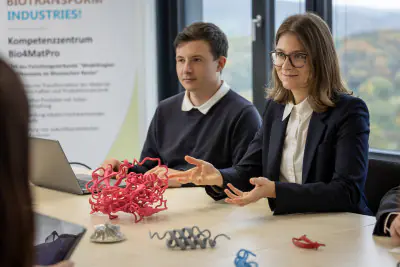
The Bio4MatPro Competence Center for the biological transformation of materials science and production engineering is part of the flagship project "Bioeconomy Model Region in the former Rhenish Mining Area" and has been funded by the German Federal Ministry of Research, Technology and Space (BMFTR) with approximately €26.4 million from 2022 through the end of 2026.
More than 50 partners from industry and academia are collaborating in 23 R&D projects to drive the biological transformation of key industries in the fields of textiles, chemicals, medical technology, consumer goods, and lightweight construction.
U4A3763 (2)
U4A2828
U4A2005

By using local, renewable raw materials instead of petrochemical-based feedstocks, the Bio4MatPro Competence Center aims to develop the former Rhenish Mining Area into a resource-efficient Bioeconomy Model Region, thereby making a significant contribution to the structural change of the region. To achieve this, current product concepts and production technologies must be rethought to manufacture products ecologically and economically within a sustainable industrial value chain and to utilize them in a circular economy. Therefore, the development of new production technologies is also central to Bio4MatPro.
The goal is to manufacture products with high added value based on renewable raw materials, to establish scalable, biocompatible production processes, and to create bio-based value chains for a climate-neutral circular economy.

U4A2154 (8)

Chair of Biotechnology @ RWTH Aachen

The Chair of Biotechnology at RWTH Aachen University, led by Prof. Ulrich Schwaneberg, has a long-standing track record in enzyme engineering, directed evolution, and the development of bio-inspired materials. By combining molecular biotechnology with engineering principles, the chair has pioneered methods and technologies that bridge the gap between fundamental research and industrial application. Over the years, this environment has fostered close collaborations with industry partners and spin-offs, and it is from this innovation-driven ecosystem that the idea for the Materials Lab Incubator emerged – to systematically translate material-based technologies from Prof. Schwaneberg’s lab into real-world products and scalable solutions.

2023 grouppicture

Advanced materials an der RWTH Aachen


As one of Germany’s designated Universities of Excellence, RWTH Aachen stands at the forefront of European science and research. We combine world-class research with a thriving entrepreneurial culture, creating the ultimate launchpad for disruptive material start-ups.

Massive Investing in Disruptive Material StartUps

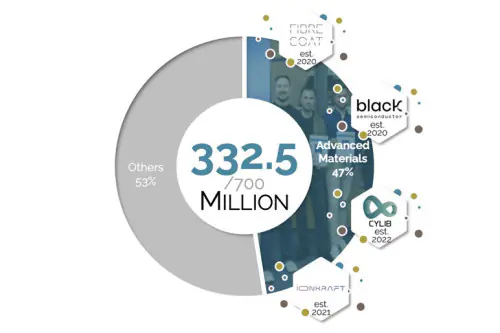
RWTH Aachen University is one of Europe's leading (entrepreneurial) universities. Last year alone, our ecosystem secured €700 million in external funding for start-ups. Notably, €332.5 million of this was dedicated specifically to deep tech ventures in the field of Advanced Materials, proving our strength in high-tech innovation.
Excellent Infrastructure for Translation & Scaling

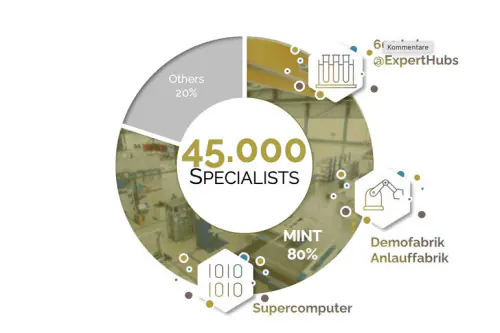
Access a massive talent pool of 45,000 specialists, 80% of whom are in STEM fields. Our ecosystem accelerates scaling through access to a high-performance supercomputer, a demo factory for small-series production, and over 600 labs available via our Expert Hubs.

Deep Integration with Industry for Innovation

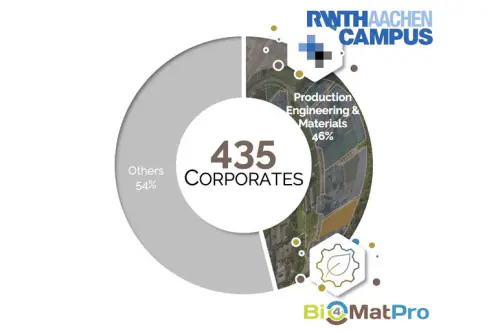
Collaboration is in our DNA. through the RWTH Campus GmbH and the Bio4MatPro competence center, we offer direct access to a unique ecosystem of 435 industrial partners. This network connects you with regional champions and global players to drive co-innovation.

The Location: ITS Baesweiler – a Symbol of Transformation

Our incubator is headquartered at the International Technology and Service Center (ITS) in Baesweiler, home to our fully equipped S1-laboratories. Baesweiler serves as the perfect backdrop for our mission:
formerly a coal-mining town, it has successfully reinvented itself as a flourishing hub for life sciences and biotechnology. It stands as a living role model for successful structural change in the Rhenish mining area, proving that innovation can turn industrial heritage into a sustainable high-tech future.
RWTH Labor Fermenter (17)
RWTH Labor Arbeiten (8)
RWTH Labor Arbeiten (4)

Europe’s Hotspot for Sustainable Materials

The Rhenish Mining Area

The Rhenish Mining Area, once known for its coal mining, is now at the forefront of Europe’s shift towards a climate-friendly, circular economy. Located in North Rhine-Westphalia, this dynamic region is undergoing a bold transformationby becoming a model region for bioeconomy. With its outstanding research infrastructure, anchored by RWTH Aachen University, the area offers an ideal starting point for scientists eager to tackle global sustainability challenges.

The drive for “biological transformation” in the Rhenish Mining Area means turning local resources into valuable, renewable materials—powering new technologies, jobs, and a future-proof economy. Here, researchers don’t just find support and funding; they join a community working together to turn scientific breakthroughs into real-world, climatepositive impact. If you’re ready to shape the next generation of sustainable materials, the Rhenish Mining Arear offers you the space and support to help make lasting change.

aachener-dom

Funders

BMWE Fz Office Farbe de
image 768x768 1 Kopie
image
Logo BMFTR